

Qingdao, Shandong, China – November 28, 2026
Global demand for critical minerals underpins clean-energy infrastructure, advanced manufacturing and global supply-chain security. Mineral-exploration campaigns increasingly extend into remote, geographically-challenging territories across multiple continents. A persistent practical dilemma faces field-project teams: collected drill-core and ore specimens must travel long distances to distant central fixed laboratories for drying, crushing, pulverising and splitting. Extended transit times alter sample moisture content and oxidation states; some readily-oxidised mineral matrices suffer measurable grade drift during shipment. Meanwhile, constructing permanent brick-and-mortar assay facilities in isolated locations faces slow permitting cycles, large upfront capital outlay and poor alignment with short-duration exploration programmes.
These real-world operational bottlenecks gave rise to container-based mineral-sample-preparation solutions. This article traces the industry-driven evolution of containerised labs, contrasts early makeshift deployments against modern process-integrated designs, analyses intrinsic technical trade-offs imposed by compact enclosed spaces, and defines practical evaluation criteria for field-project stakeholders.
Origins and Two-Phase Industry Evolution
Containerised mineral-lab concepts originated from the practical constraints of episodic geological-exploration and early-stage resource-assessment work. Many field campaigns run for only a few months before site demobilisation occurs, making permanent laboratory construction economically unjustifiable.
Phase One: Simple container-housing (load-on-board type) The earliest implementations repurposed standard shipping containers purely as protective enclosures. Crushing and screening equipment was procured separately and placed inside unmodified container shells. This low-cost, fast-delivery approach achieved one core objective: eliminating long-distance sample transport.
Nevertheless, these makeshift set-ups lacked purpose-engineered vibration mitigation, organised dust-extraction and deliberate zoning. Continuous operation of comminution machinery induced structural deformation of container frames. Dust accumulation inside the sealed compartment created both occupational-health hazards and cross-sample-contamination risks. Unregulated power supply and uncontrolled internal temperature undermined preparation repeatability. As overseas mineral projects multiplied, the limits of this “equipment-inside-a-box” philosophy became widely recognised.
Phase Two: Process-integrated containerised sample-preparation labs (modern mainstream approach) Modern-generation units reverse the design logic. Instead of fitting workflows around a pre-existing container shell, engineers define the complete drying-to-splitting sample-preparation workflow first, then configure container framing, anti-vibration foundations, dust-venting, power distribution and noise abatement around these process requirements.
Internally the container is functionally zoned: sample-receiving and drying area, crushing-grinding high-vibration zone, and sample-retention storage zone. Material follows predominantly unidirectional workflows to minimise sample mix-up and cross-contamination. Heavy-duty anti-vibration bases decouple high-energy crushing-pulverising equipment from the container main frame. Localised dust-extraction points are matched to each dust-generating station.
An important conceptual distinction must be emphasised: containerised sample-preparation labs are not equivalent to complete containerised analytical laboratories. Their primary function is executing physical pre-treatment to produce properly-sized, conditioned test aliquots. Final instrumental measurement may still be performed at central accredited facilities; sample-preparation happens on-site to preserve specimen integrity. This configuration remains the preferred model for most remote resource-evaluation initiatives worldwide.
Inherent Technical Conflicts Imposed by Compact Enclosed-Space Architecture
All container-lab engineering challenges stem from one fundamental constraint: standard shipping-container dimensions create severely limited internal footprint, forcing dense equipment packing. Three recurring technical tensions demand deliberate design resolution.
Vibration propagation risk Jaw crushers and pulverisers generate strong cyclic excitation forces. Direct mechanical coupling to the container shell leads to weld fatigue, degraded door-seal performance and thermal-control instability for adjacent drying hardware. Purpose-built anti-vibration mounting bases and reinforced container framing mitigate this hazard.
Dust-airflow balance inside sealed compartments Comminution generates large volumes of fine mineral dust. Insufficient ventilation allows particulate build-up with health-and-safety consequences. Excessively high exhaust-air velocity entrains valuable fine mineral fractions, causing sample mass-loss and negatively biased assay results. Dust-extraction capacity must be precisely matched to real-world dust-generation rates of each piece of processing hardware.
Sequential-process workflow coordination in confined layout Samples exiting drying ovens retain elevated temperatures and require adequate cooling prior to crushing. Crusher output particle dimensions must satisfy feed-size limits of downstream pulverisers. Poorly-planned material-transfer routes in cramped quarters cause workflow bottlenecks and operational interruptions. Intentional unidirectional material flow design alleviates these pain-points.
Three-Dimensional Practical Evaluation Framework for Field-Project Deployment
Assessment should move beyond superficial inspection of outer container dimensions, and centre on how well the hardware resolves real-world field-site constraints.
End-to-end process-integration capability The key benchmark is whether drying-cooling-crushing-pulverising-splitting forms a logical closed-loop workflow, rather than a random collection of machinery. Project evaluators should request 2-D internal-layout drawings and trace the complete physical path for incoming rock-specimens through to final retained subsamples. Verify that dust-collection extraction points are positioned locally at each dust-generating station, distinguishing point-source capture from crude whole-box general ventilation.
Site-specific custom-engineering competence Standard-specification shipping containers represent generic hardware. Actual mine-site conditions vary substantially: high-altitude low-pressure cold environments, humid corrosive coastal sites, sand-laden arid locations, or sites with constrained temporary power capacity. Competent solution providers adjust equipment sizing, container insulation, anti-corrosion coatings and electrical load according to submitted project-site metadata. A reliable practical test is submitting local-climate and ore-matrix parameters and reviewing whether the proposal delivers targeted adaptations, or merely repeats an off-the-shelf template.
Complete full-lifecycle delivery and field-service readiness Remote exploration sites rarely employ dedicated, highly-trained laboratory-maintenance technicians. Turnkey delivery encompasses conceptual design, container fabrication, equipment integration, factory-acceptance collective commissioning, on-site assembly, and hands-on operator training. Long-distance spare-parts logistics constitute a critical risk factor. Qualified vendors supply clear lists of consumable-wear components plus scheduled preventive-maintenance guidance. Procurement teams should differentiate between pure metal-sheet-fabricators, equipment resellers, and solution providers with proven mineral-sample-pre-processing domain knowledge.
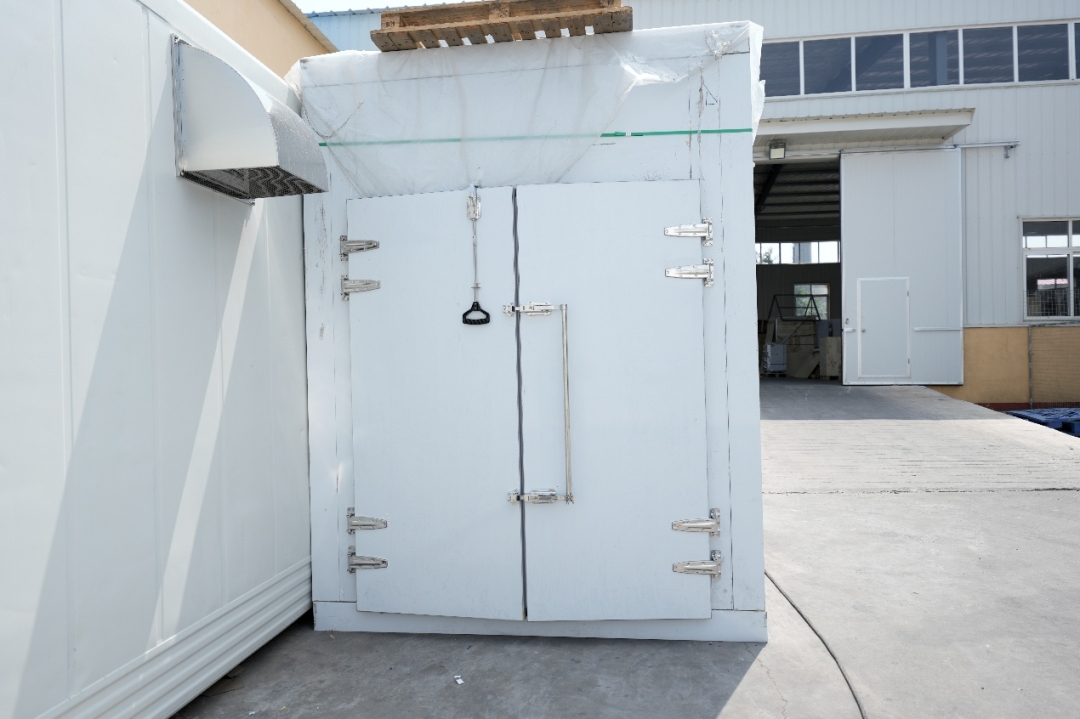
The containerised sample-preparation lab engineered by Qingdao Decent Group follows this process-led integrated-design philosophy. Built around a connected drying-crushing-grinding workflow, the solution targets field-exploration and small-mine on-site sample-pre-processing requirements.
Full product information: https://www.decent-group.com/product-category/mobile-containerized-labs/
About Us
Qingdao Decent Group is a global high-tech enterprise specializing in innovative mineral laboratory equipment and systems. With strong R&D, advanced manufacturing, and worldwide service capabilities, DECENT delivers efficient, precise, and sustainable laboratory solutions, including fire assay equipment, sample-preparation systems, and containerized mobile labs.
Media Contact
Company Name: Qingdao Decent Electromechanical Tech Co., Ltd.
Contact Person: Media Relations
Email: Send Email
Country: China
Website: https://www.decent-group.com
Press Release Distributed by ABNewswire.com
To view the original version on ABNewswire visit: Containerized Mineral-Sample-Preparation Laboratories: Solving Long-Standing Field-Exploration Pain-Points